
The system, in order
- If all you do is post and send people to your website, you can get a 0.01% conversion rate: a thousand visitors and one form fill.
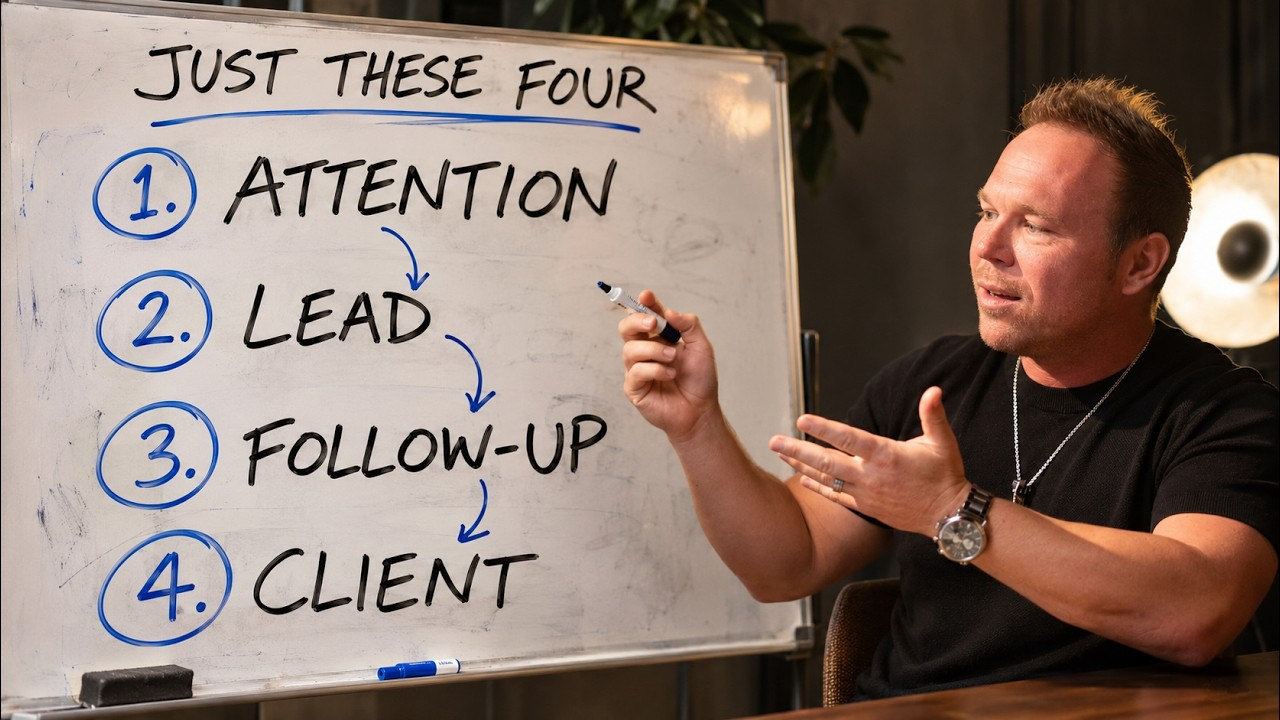
- Start with awareness: consistent posts, ads, emails, and videos on the channels your customers already use.
- Use a landing page that tells people they are in the right place, offers something in exchange for their name and email, and triggers a pixel.
- Follow up with short personal emails, a newsletter, and retargeting ads. Brad believes it takes 24 times on three platforms before someone trusts you.
Sending people only to your website is not a system
Send people to your website. That's all you do. You're going to get a 0.01% conversion rate. Think about it this way: if you do all this posting and you get a thousand people to your website, and only one person fills out a form, how big are you going to be able to grow your business?
Brad Smith, entrepreneur and owner of AutomationLinks, has been doing this for over 11 years and has worked with over 3,000 brands. He says this is not a one trick that solves every problem. It is a repeatable system that works for lawyers, accountants, e-commerce stores, local businesses, and even marketing agencies that hire his team to implement it. You can build it one time, get results, and own it for years.
He had a customer spending $50,000 on ads and returning $40,000. That's not good marketing. Your company is worthless if you don't follow up. He believes in a clear number: 24 times on three platforms. That's how long it takes for somebody to trust you. You can set that up once, even if it is not you doing the work. It could be a freelancer, an intern, or a company like his.
Step 1: awareness, so people hear about you
Awareness is where somebody first hears about you. That can be a social media post, advertising, emails, LinkedIn, X, or YouTube. You need to be consistent, and you need to find one channel where you create content. You don't even have to be the one making it anymore, because AI can help.
Just start posting once a week, three times a week, or maybe five times a week. The goal is to build something people see over and over, with the same look you will later use in retargeting ads, so they know exactly who you are.
If no one ever knows about you or hears about you, how are they going to pay you? Brad showed combined stats from clients using this system: over 9,000 visitors from X, 8,000 visitors from YouTube, and thousands more coming in. More important, those people were converting at 7 to 10% because the follow-up was in place. You need to track this. If you're posting, or spending time and money on social, you should be able to see an ROI.
Step 2: a landing page, not just your website
After you drive awareness, people start to like you, see you, and trust you. What happens after that should be a landing page. You can keep your website as it is. The landing page should look like your site, but it does more. It tells your ideal customer they're in the right place, it gets their name and email, and it triggers a pixel so the rest of the system can work.
The title needs to match the keyword you're running ads on and the pain point you solve. Add a short description that says, you're in the right place, this is exactly what you searched for. Then immediately give them a way to share their name and email, and give them something back. Years ago that might have been a PDF. Now, with AI, you can give them an instant result, show them what they're doing right or wrong, and identify the gap. That's how you turn somebody who has never heard of you into a fan, a lead, and potentially a client.
Keep backing it up down the page: brand trust, common questions, what to expect, why they should trust you, and reviews. Put the form at the top and again at the bottom. Make the page about your customers and their pain points. For e-commerce, show the product, show what to expect, and make the one, two, three-step process simple. Brad says these landing pages have helped scale brands from $1 million to $10 million, because they collect the data you need so you can follow up.
The pixel, and why a thousand people can be enough
Brad says 99% of businesses don't have a pixel. A pixel triggers when somebody lands on your website or landing page, and that is what makes retargeting possible on Facebook, Instagram, YouTube, and other platforms. If you say the word shoe, next time you log on to TikTok, there are shoes all over your feed. You want that to be your brand.
You don't need millions of people to know about you. That costs a lot of money. You need about a thousand. If you can get about a thousand people to the website and landing page, and you follow up with them, they're going to think you're a celebrity. One brand owner called Brad and said everyone he got on a call with thought he was famous, because every time they logged into social media, they saw his face. When you see someone over and over everywhere you log in, you think they're bigger, you think they're a brand you can trust, and you want your customers to perceive you just like that.
Step 3: an instant result, then follow up so they don't forget
Once someone fills out the form, give them an instant result. With AI, it's easier than ever to give them a score, identify their gaps, and show them the pain point you can help with. For e-commerce, that can be a coupon code and a video that builds a relationship. For a B2B or online business, give them the answer, show a short video of who you are and how you can help, and make it easy to book a call. Don't make them go look for the scheduler.
Imagine your customers are at a red light in their car, late to pick up their kid from school. They're looking up a pain point, they see your post and your ad, they go to your landing page, they fill it out, they probably didn't watch the video, and the light turns green. After somebody hears about you the first time and hits your site, they will not remember you if you don't follow up. They'll go search again, your competitor will pop up, and they'll hire the competitor.
Brad had a customer become a customer 3 years after signing up on his landing page. The person found him on LinkedIn, filled out the form, and Brad never heard from him. Three years later he called and said he was ready to hire. Brad looked in the CRM and saw he had opened every email for 3 years, never responded, and never left a comment. After you send about six emails, you go into a newsletter that's educational and helpful. The goal is to stay top of mind.
Emails should come from you, not your company
Emails are Brad's second largest revenue driver, but a lot of people sign up for the cheapest tool and send newsletter-style promos nobody opens. Don't send things your customers don't care about. Your customers care about you. Emails from his team come from Brad, because people remember him. They don't care about AutomationLinks. No one has a relationship with the company name. They have a relationship with him.
Keep it around five lines, short and to the point, with your signature. Show empathy. Your clients are busy. They don't have time to read a long email. Get them something short, solve the pain point, and ask them to book a call. Then remind them again. Remind them a couple of days later. Remind them one last time. Then send them into your newsletter. Build the emails around value, education, and the relationship. If you're going to put pictures in emails, warm the domain up and use a system that can land in the inbox, because if you end up in spam, they'll never see it.
Build it once, then let it run
Once you build this, it can run on autopilot. Social posts get scheduled. You build the landing page once. You set the follow-ups once. You record the welcome video once, and people see it over and over, including on your thank-you page and on YouTube. You only need professional video and headshots once. Brad talks about helping Michelle with Go Squared Away create one video and one day of headshots that filled her social posts and ads for a year.
Usually, we see people get those 30 leads in 30 days right around month three. Everything needs to be branded, automated, synced, and tracked. Set the tracking up once and you can roll. You can get help from an intern, a freelancer, or a team. If you have a good product and you set the system up, it can grow. The compounding effect is what helps you scale from $1 million to $10 million without only spending more on ads.
From AutomationLinks
- How ads, landing pages, CRM, and follow-up work together
- The complete guide to creating a high-converting landing page
- Lead follow-up, funnels, and retargeting
Common questions
What is a $1 million marketing strategy, according to Brad Smith?
It is a system you build once: awareness on social and ads, a landing page that collects a name and email, a pixel for retargeting, then follow-up emails, a newsletter, and reminders to book or buy. Brad Smith, entrepreneur, says sending people only to your website can leave you with a 0.01% conversion rate, and that follow-up is the part most businesses skip.
Why isn't a website enough?
If all you do is post and send people to your website, you can get a 0.01% conversion rate, like a thousand visitors and one form fill. A landing page tells people they're in the right place, offers something in exchange for their contact details, and triggers a pixel so you can follow up.
How many times should you follow up?
Brad believes it takes 24 times on three platforms before someone trusts you. He also talks about sending about six emails in the first stretch, then moving people into a helpful newsletter so you stay top of mind. One person became a customer 3 years after signing up, after opening every email.
Do you need millions of people to see your brand?
No. Brad says you don't need millions of people to know about you. About a thousand people on the website and landing page, plus follow-up, can be enough for people to feel like they see you everywhere and to trust you.
Who should the emails come from?
From you, not just the company name. Brad sends personal emails with his signature, kept around five lines, because people remember him. They don't have a relationship with the company name.
Keep reading
More in Ads
Follow Brad
- YouTubeEducational Coaching
- YouTubeBuilding a billion dollar AI brand
- X@bradsmith
- Instagram@bradsmithcoach
- LinkedInBrad Smith
- Emailemail@thebradsmith.com
Get the free weekly tips in AI Accelerator, or start with the free training.