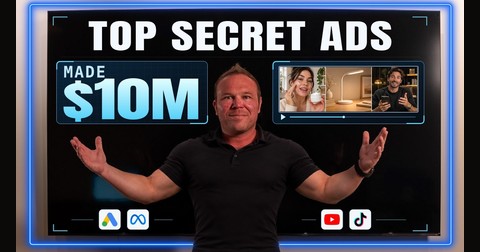

The four steps
- Send new visitors to a blog post or video, not your homepage.
- Retarget them and get them on your email list.
- Give them something useful on a landing page so they opt in.
- Make it easy to book a call or buy when they're ready.
Why advertising fails on the way from $1M to $10M
Let's say you spent $1,000 to get 1,000 visitors, and only one person signed up and showed interest. That one person probably doesn't even buy. Maybe they fill out a form. What if you can increase that to 30%, and then get 30 of those people to book a call?
A lot of businesses only do step one. They hear Facebook Ads is the next best thing, or they put all their money into Google Ads, and they send everyone to one page. After that page, you lose them. They don't care about you, they don't remember you, and they don't even know what your business does. When they're ready to hire someone, they hire your competitor, because you never built steps two through four. You can't scale from $1M to $10M on a homepage click.
The Nike shoe effect
A good advertising strategy makes people aware of you, then retargets them on every channel, and sends them to four different places so they remember you, trust you, and call you because they've seen you in their feed every day.
I call this the Nike shoe effect. If you say the word shoe, or the word Nike, you start seeing their ads on Instagram. Then you get a newsletter from them. Then you see an offer. Then you hit the checkout page, and a few days later you're buying Nike shoes, because they're the brand that showed up, the brand you remember, and the brand you trust.
If you have a business, are you doing that for your brand? Are you making new customers aware of you? Are you reminding them? Are you building trust? And are they buying from you when they're ready to buy?
The four-step advertising strategy to scale from $1M to $10M
The four simple steps you can copy for your brand are a blog post or video, a newsletter, a landing page, and a schedule or checkout page. The goal is to get somebody to schedule with you, or buy from you if you're an e-commerce brand.
You can run this on Google Ads, Meta ads, LinkedIn, YouTube, X, and even Reddit, OpenAI, ChatGPT, and TikTok. You only have to set this up one time. If you do it right, it helps you spend less on ads and get better results. For a closer look at the landing page in this flow, see website vs landing page.
Step 1: Send new visitors to a blog post or video
When somebody first hears about you, they don't know you, they don't know your brand, they don't know your website, and they don't know if they can trust you. So why would you try to get them to schedule a call or buy something the first time they see you?
Provide value first. When I run ads, I send new people to a blog post or a listicle. For us, it's five shocking truths about ads. For your brand, what's a YouTube video you can make, a blog post you can write, or something you can put on your website that's pure value? If you're an e-commerce brand, tell them five reasons your product is better. If you're an accounting firm, tell them five things they didn't know about accounting. You're not trying to sell them. You're trying to teach them.
You can still have a newsletter opt-in on that page. The bigger win is the data. You get them to your website, you collect data for your pixel, and you can follow up by email. Once you know they're interested, you can trigger retargeting ads so they never forget.
I send Google Ads for keywords like advertising strategy, advertising agency, and advertising system to a blog post. The first time someone Googles anything about ads, I want them to learn from me. For help picking the right platform, see where your customers are searching.
How to retarget across advertising platforms
The next time they're on Facebook or Instagram, I want them to see similar ads to the website, same colors, same logo, same images, and the same copy. Then show up on LinkedIn, X, YouTube, Reddit, ChatGPT, and TikTok. You want your brand to be everywhere. That's what shows authority.
You're not trying to get millions of people to see this, and you're not trying to go viral. You're trying to build a collection of about 1,000 people who are your ideal customer, so you can collect their data. They're going to think your brand is bigger than it is.
I had a client spending over $50,000 on ads. We put this system in place, and they lowered their ad budget to $10,000 a month. In just a few months, their customers were calling saying, you're famous, I see you everywhere. We weren't trying to get millions of people in the flow. We were trying to stay in front of about 1,000 ideal people. For the simple picture of how that pixel works, see what retargeting ads are and how to make sure your leads don't forget about you.
Step 2: Get people on your email list
The next group of ads starts retargeting them, often on Facebook first, because that's usually the easiest place to start. They've already been to your blog post or listicle. Now send them to a newsletter page. A newsletter isn't a promise to buy, and it isn't a sales call. It's another way to collect data and follow up.
I see so many businesses losing money on ads because they skip the follow-up. The follow-up is where the money's at. Once they're on the list, email them once a week to teach, not to sell. Share a tip. Remind them you're the brand building value. When they're ready, they click the link from the newsletter or the retargeting ad and come back to you, not your competitor.
If you only ran ads to your homepage, all that traffic disappeared, and ads became the first thing you shut off. When people start answering emails and saying they're interested, that's when advertising starts to feel like it's working. Don't pour more money in yet. Step three is the part you need to set up first. To see which ads are actually bringing those people in, read how to track which ads drive sales.
Step 3: Give people a reason to opt in
Step three is the landing page, and it has to be useful enough that they opt in again. Keep it on the same keyword and the same offer they already saw. If your landing page says something completely different, no one signs up. If you're the fitness expert they found, don't switch to a totally different offer.
For us, people find us through advertising. They see the blog post, they see the newsletter, then they hit a landing page that gives them something of value. As soon as somebody opts in, we give them an advertising mockup, so they can see what their ads would look like and how much they should be spending. I'm not switching the topic. They found me from ads, they've seen ads, and they opt in for ads.
Give them something they can use right away. If they have to wait a week or a month, why should they sign up? You only need to set this page up once, and it can increase your conversion rates by up to 30%. Compare that with sending ads to a regular site page in website vs landing page.
Step 4: Get people to book or buy
By this point you've given them a lot, a lesson, a newsletter, something useful. Most of them don't have time to do all of this on their own. They don't want to be the expert. They want their problem solved. If you've shown up, taught them, and stayed in front of them, you're the one they call when they're ready.
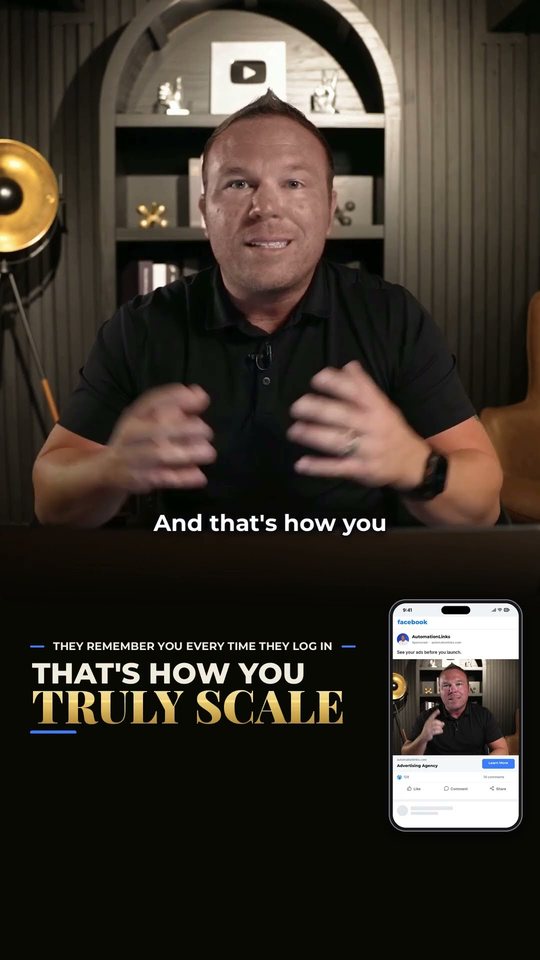
I always think of somebody driving in their car. They click an ad, then the light turns green, and they completely forget about you. You just spent $5 for a look. That's why you spend a little more to retarget them, get them on the email list, and give them something of high value. When they finally sit down with their spouse, or they're at their desk, or they meet with their team, they think of you. Nobody makes the decision the first time they see you.
Go back to that $1,000 and 1,000 visitors. Instead of one person showing interest, you get 300 people in the next week or month to fill out a form or get on your email list, and then 30 of those people book a call or buy. That's where advertising starts to change a business. If your ads still feel stuck, see three quick fixes for ads that aren't working.
How to split your advertising budget
Once the system is in place, you can actually spend less. Your ad costs go down, your conversion rates go up, and retargeting costs less than finding a cold visitor. The most expensive ad you can run is step one, the awareness stage, because you don't know who that customer is yet. The lowest costs are retargeting, because you already have the pixel, the data, and the email list.
I put 60% of the budget into step one, to find the ideal customer, and 40% into retargeting across the other channels. After you test and you know the searches that convert, you can spend even less on awareness. I don't need to spread a budget across 100 keywords once I know three of them work. You spend the same, if not less, and you increase the conversion rate. For a wider look at spend, see how much a small business should spend on marketing and Google Ads vs Facebook Ads.
How to grow a business to $10M with advertising
If your goal is to grow a business to $10M, you want a system you can leave running. We helped a company sell for over $10 million, and all they do is spend $1,500 on ads. They were able to sell at a higher valuation because they had a proven marketing system. This system can run every day, every week, every month, even every year.
You'll still test creatives, you may change the offer on the landing page, and you have to make sure the pixels are tracking the right people. Once it's set up and proven, you can let it run. That's the point of Work with us at AutomationLinks: set it up once, then scale.
An advertising plan to 10x revenue
If you're feeling overwhelmed, there are three routes. You can hire a team in your own business, you can hire freelancers or try to do it on your own (I see a lot of mistakes there), or you can work with a team that already runs this every day.
If you're under $10,000 a month in revenue, try it yourself or hire a freelancer, get a few of these pieces in place, and start with $500 a month on ads. You'll start seeing the return. If you're already at $1M a year, or you're past that and you're growing, reach out to a pro and copy this advertising strategy for $1M businesses so you can scale toward $10M.
If you want to grow, you have to put a little money into ads. Don't waste it. Don't send ads to your homepage. Set up the system. Run the ads. Get the results. What are you trying to grow?
From AutomationLinks
- Work with us at AutomationLinks
- Advertising agency strategy, a four-step ad system
- How ads, landing pages, CRM, and follow-up work together
- How to run Google, Facebook, and YouTube ads with AI marketing automation
- Lead follow-up, funnels, and retargeting
- The complete guide to creating a high-converting landing page
Common questions
What advertising strategy helps you grow from $1M to $10M a year?
A four-step advertising strategy: send new people to a blog or video, retarget them onto a newsletter, give them something useful on a landing page, and make it easy to book or buy. Build the follow-up first, then scale the ads.
How do you scale from $1M to $10M with advertising?
Don't pour more money into your homepage. Set up the four steps once, put 60% of the budget into finding the right people and 40% into retargeting, and keep showing up until they book or buy. We helped a company sell for over $10 million, and all they do is spend $1,500 on ads, because the system was already in place.
What is an advertising strategy for $1M businesses?
The same four steps. At $1M a year, the problem is usually follow-up, not more traffic. Get people to a blog or video, a newsletter, a landing page, and a way to book or buy, then run ads into that system.
How do you grow a business to $10M with advertising?
Put a proven advertising system in place, then keep it running. Test creatives, keep the pixels tracking the right people, and spend on awareness and retargeting. A client sold for over $10 million spending $1,500 on ads because they had that system.
What is an advertising plan to 10x revenue?
10x from $1M a year is $10M. The plan is not a bigger homepage ad budget. It's a blog or video, a newsletter, a landing page, and a way to book or buy, with 60% of spend on awareness and 40% on retargeting.
Should I send advertising traffic to my homepage?
No. Don't send ads to your homepage. New visitors don't know you yet. Send them to a blog post or video that teaches them something, then follow up.
How should I split my advertising budget?
Put 60% into awareness, that's step one, and 40% into retargeting. Awareness costs more because you don't know the customer yet. Retargeting costs less because you already have the data.
What is the Nike shoe effect?
If you say Nike or shoe, you start seeing their ads, then a newsletter, then an offer, then the checkout page. A few days later you buy, because they're the brand you remember and trust. That's the follow-up loop a good advertising strategy builds.
Keep reading
More in Ads
Follow Brad
- YouTubeEducational Coaching
- YouTubeBuilding a billion dollar AI brand
- X@bradsmith
- Instagram@bradsmithcoach
- LinkedInBrad Smith
- Emailmail@thebradsmith.com
Get the free weekly tips in AI Accelerator, or work with us at AutomationLinks.