
Stop paying for web hosting.
My sites run on Cloudflare's free plan: hosting, domain management and deploys. The only bills are the domains and a $5 Workers plan I'm not sure I even use.
The last time I tried to cancel a hosting plan, the support rep asked for my social security number. Making it painful to leave is the whole model.
For most solo sites, Cloudflare's free plan is the best deal in software right now.
Referral Feed
43 posts from 16 people
Tips and lessons from Brad and the people in his Referral Directory. Tap a name to see their profile.
Showing See them in the directory

Arkansas duck season is open.
First split runs through the 29th, then it picks back up Dec 10.
Flooded timber or open field? Pick one.
First split runs through the 29th, then it picks back up Dec 10.
Flooded timber or open field? Pick one.
 StackyardHome Services · Seasoned mixed oak firewood delivered in central Arkansas.View profile

Rest day was on the schedule.
My body didn't get the memo.
Shoulders. Done.
59 and I still have to fight the urge to train every day. Rest is part of the work too.
Do you take your rest days or skip them?
My body didn't get the memo.
Shoulders. Done.
59 and I still have to fight the urge to train every day. Rest is part of the work too.
Do you take your rest days or skip them?

 Brent LaJeunesseWriting & Speaking · Writer and speaker, and author of Forged After 50 and Badge to Boardroom.View profile

If you own a home service company called something generic like Bodhi’s Home Services and you offer HVAC, plumbing and electrical I would structure the local SEO VERY differently than most people do.
I would keep one main domain:
bodhishomeservices(.)com
Then build a separate service page for each vertical:
bodhishomeservices(.)com/plumbing
bodhishomeservices(.)com/hvac
bodhishomeservices(.)com/electrician
Then I would have a separate Google Business Profile tied to each service.
Bodhi’s Plumbing
→ bodhishomeservices(.)com/plumbing
Bodhi’s HVAC
→ bodhishomeservices(.)com/hvac
Bodhi’s Electricians
→ bodhishomeservices(.)com/electrician
Now Google has a much clearer relationship between:
The business name
The service
The landing page
The content
The reviews
The category
The market you are trying to rank in
Trying to rank one generic profile called “Bodhi’s Home Services” for plumbing, HVAC and electrical at the same time is making the algorithm do way too much guessing.
I would rather make every profile painfully specific.
If I want plumbing calls I want Google seeing:
Plumbing in the GBP name
Plumbing as the primary service
Plumbing content
Plumbing reviews
Plumbing photos
Plumbing landing page
Plumbing internal links
Same thing with HVAC.
Same thing with electrical.
Then if you want to take it one step further you can make the profile even more specific to the market.
Bodhi’s Plumbing Boca Raton
Bodhi’s HVAC Boca Raton
Bodhi’s Electricians Boca Raton
Now you are reinforcing BOTH what you do and where you do it.
The biggest mistake multi-service home service companies make is trying to make one generic brand page rank for everything.
I would build one strong domain and then break the local presence out by service so every profile has a clear purpose.
One domain.
Three service pages.
Three Google Business Profiles.
Three completely different local ranking targets.
Do not make Google guess what you want to rank for.

 Stryker DigitalLocal SEO · Local SEO and conversion-focused websites for home service businesses.View profile

"things are good now but who knows how long it'll last?"
I've worked with a few of these owners as a financial planner, each one is sitting on a ton of cash and saying this exact thing
Here are the 3 planning steps to take when you feel that way:
I've worked with a few of these owners as a financial planner, each one is sitting on a ton of cash and saying this exact thing
Here are the 3 planning steps to take when you feel that way:

 Reach Strategic WealthFinancial Planning · Fee-only financial planning for concentrated stock and corporate exits.View profile
This brand new YouTube SEO trick honestly feels like cheating.
I just had a $20M company book a sales call with me from YouTube search.
My only request: don't go after my same keywords :)
Send this to whoever runs your marketing.
I just had a $20M company book a sales call with me from YouTube search.
My only request: don't go after my same keywords :)
Send this to whoever runs your marketing.

 Brad SmithFounder of AutomationLinksAbout Brad

AI agents are really skilled in using CLI tools. Invest some time in installing them, learning at least very basics, and letting your AI use them. It'll pay off handsomely.
 The Java GuySoftware & Training · Training and software for professional Java developers.View profile

Turned down $12K for a job yesterday.
Custom CRM with some special analytics tracking going on.
Can we build it? Absolutely.
Is it worth taking on something outside of our standard and streamlined workflow and processes? Nope.
Our time and effort is better spent on digital marketing for businesses. Not dev projects.
Just because you can land a job doesn’t always mean it’s the right decision to do so.
If it’s a poor fit for you or a poor fit for your lead, best for both parties that you walk away.
Learned the hard way many years ago.
 EversiteWeb Design & Marketing · Website design, ongoing updates, and digital marketing.View profile

If AI describes your business, check the answer like an invoice.
Right name. Right services. Right contact details.
That's a useful starting point for an AI visibility check at @cloudravel.
Right name. Right services. Right contact details.
That's a useful starting point for an AI visibility check at @cloudravel.

 CloudRavelAI Services · Agentic AI setup and ongoing bot care for small businesses.View profile

One big customer isn’t always worth the same as three smaller customers, even if they generate the same revenue. We’re changing our pricing strategy and sales motion in our shutter business to account for that.
You should consider this too if you run a home service business or agency 👇
Put simply, we’d rather sell 15 shutters to one homeowner than 5 shutters each to three separate homeowners.
This probably applies to your business too. Think about:
-One in-home sales consultation instead of three.
-One installation trip instead of three.
-One production setup instead of three.
-Less administrative work coordinating orders, scheduling, and communicating with customers.
Same number of shutters sold, but potentially VERY different economics.
We’ve been digging into our sales data recently and found that we close roughly 70% of our shutter jobs with 1–9 window openings. Once we get to 10+ openings, our close rate drops pretty significantly to around 40%.
This why looking at more than just overall close rate is important. You need to look at it by product and by other segments like cohort or unit size. If we had just rested on overall close rate, we would think everything is fine with our shutter sales process (but IT’S NOT!)
Those larger, whole-home jobs are exactly the ones we want MORE of. Not just because they’re bigger tickets, but because they’re more efficient for us to produce and install. So we need to take action to target that cohort specifically.
As a result, we’ve been rethinking how we price and sell these larger jobs. The obvious solution would be to start offering bigger discounts to win more business. Except that’s an expensive lever to pull if you don’t have to.
Since we manufacture our own shutters, we have a few premium upgrades we can offer customers, like hidden tilt rods and larger 4.5” louvers (basically a nicer, more modern-looking shutter).
On a whole-home job, offering both upgrades for free can represent roughly 10% in additional retail value to the customer. But the incremental cost to us is a FRACTION of what giving them a straight 10% discount would cost.
Therefore, we’ve decided to roll out a new sales approach. Full price is always the starting point. If a customer is shopping multiple quotes or we’re having trouble closing, our reps can offer free premium upgrades before discounting the price.
On larger jobs with 10+ openings, we’re giving our reps another option: offer a straight 10% discount INSTEAD of the upgrades if that’s what they think it takes to win the business. They can’t stack the two offers without management approval.
Now, giving away 10% of revenue certainly isn’t ideal (and just I spent some time above arguing against it), but we’re willing to sacrifice some margin on these larger jobs because we believe the operational efficiencies can more than make up for it.
As we implement this, we’re not just going to measure whether this increases our close rate. We also want to understand what it does to our gross profit dollars per opportunity and our overall profitability after accounting for the costs of selling, manufacturing, and installing these jobs.
Because if we increase our close rate and revenue but end up making the same amount of money for a bunch more work, what did we accomplish? We actually just made the business busier, not more profitable.
I suspect this applies to a LOT of businesses outside our industry. Not all customers, orders, or revenue dollars are equally profitable. Some jobs are simply much cheaper to service than others, and that should probably influence how aggressively you’re willing to price them.
We’re going to test this over the coming months and see what the numbers tell us.
I’d much rather discount strategically to win the RIGHT types of jobs than offer blanket promotions that give away margin on every job. Sizing and job type is key and you need good data to see this!
 AAA Blind & Shutter FactoryHome Services · Custom shutters, blinds, and shades for the Grand Strand.View profile

Argo IQ hired us for a logo. 10 months later: 400+ deck requests and $42K MRR.
Hi, I’m John. I run Formfactor, a design studio helping AI founders win customers & investors. 20+ brands in the last 3 years.
This is the project I’d show any AI founder first, told with Trenton's numbers.
400+ deck requests
40+ VC meetings
$150K committed, with Forum Ventures
$1K to $42K MRR between December 2025 and May 2026
The brief was a logo. The problem was bigger.
July 2025. Argo IQ asked for a logo and a landing page.
The first call made it clear the logo wasn’t the problem. Argo IQ was building a new AI category. Nobody had a mental model for it, and the messaging was too technical. Investors and buyers couldn’t picture what it did.
So we started with positioning, not pixels.
Weeks 1-2: the brand
Three rounds of concepts. The main competitor had a dark site with a blob, so we went the other way: an F1-inspired wordmark, a rich magenta, and visuals of people and AI working together.
The mark had to hold up everywhere, from the side of a building to a single keycap.
The deck came before the website
Two weeks in, @forumventures showed interest. So we paused the website and made the deck the priority.
8 versions in 33 days, from a 7-section landing page to a 14-slide deck:
Founder credibility up front
The traction curve on its own slide
Argo IQ framed as oversight infrastructure for AI
Deck requests went from 110+ in two days to 350+, with 40+ VC meetings.
VCs wanted a narrower wedge. We shipped it the same day.
The feedback was consistent: they liked the vision but wanted a sharper starting point. We picked marketplaces, where bad data kills trust and revenue.
The marketplace landing page went live the same day that feedback came in.
Into the Forum Ventures accelerator
In November 2025, Argo IQ was accepted into the Forum Ventures accelerator, with investment.
The homepage went from first draft to live in 6 days, and a healthcare page in 5. Forum Ventures shared the site with its investor network during the round.
Selling before the product was finished
Every early AI company hits this: buyers want to see it working before it’s built.
We designed a working demo, then rebuilt it in code when the first direction didn’t land. It had a live dashboard, workflows scoring claims in real time, a log of every decision, and a chat to question the system. It made the category real on a sales call.
Where it landed
$1K MRR in December 2025, $24K in March, $42K by May 2026
11 customers by April, with no paid acquisition and no churn
$150K committed via SAFEs and Forum Ventures
37 investor referrals from Forum Ventures in March, and about 69 VC calls in 16 days after Showcase Day
What I’d tell any AI founder
Let the raise/launch set the order. If investors are circling, the deck comes before the website.
Ship the day the feedback lands. In a raise, momentum is the asset.
Treat design as a wrapper around sales and fundraising, not a project to manage. Your time belongs with investors and customers.
Same playbook, other founders
BetterCampus: brand, product and website for a study extension used by 2M+ students
Spacestation Labs: rebrand and repositioning for a $1M Reddit marketing agency
If you’re an AI founder raising or selling in the next few months, ✉️ DM me “DESIGN” and I’ll show you what to fix first.

 John LamWeb Design & Marketing · Design studio for AI-native service and product companies.View profile

Anyone who's been an agentic coder for a while knows how difficult it becomes to maintain big apps
Documentation is one way to keep them aligned, but doc/code drift is a real challenge. Be it in any form (local docs or an online tracker)
The real solution is using state machines. I guess sometimes simple is better than smart.
1. Build State Machines for your app.
2. Use them to align your backend code.
3. Add a layer of Frontend on top of it.
4. Be ready to use state machines for the frontend in case of complex apps.
Are you using state machines yet? If yes, which tool are you using to document them? @AskPK123
 Ask PrateekConsulting · Personal site of Prateek Kumar, an engineer and self-described life designer.View profile

I know my custom CRM takes more time than just paying for one with more features, but creating it to fit my exact needs is really fun.
Getting close to basics being done, then I’ll connect it to email, then implement my AI.
Getting close to basics being done, then I’ll connect it to email, then implement my AI.
 Blackfin AccountingAccounting & Bookkeeping · Bookkeeping, payroll, and tax for service businesses in Bozeman, MT.View profile

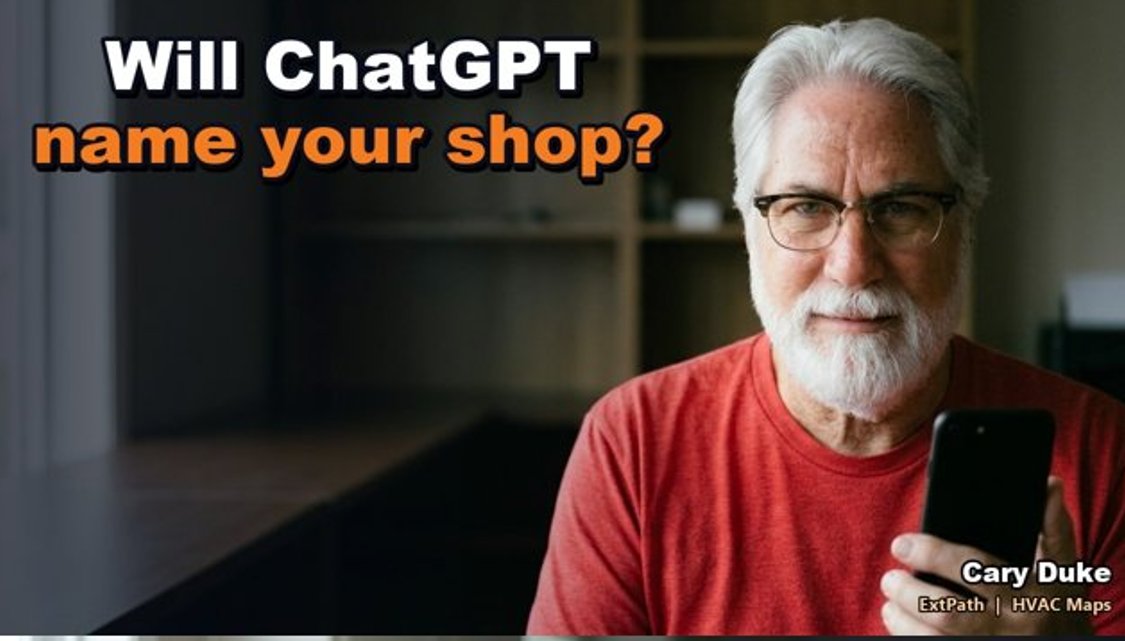
The question you should be asking today is: Can my HVAC shop be found on ChatGPT, Claude, Perplexity, Gemini or Grok?
The 2nd question you should be asking is my SEO strategy sufficient to be found in those places?
How?
Super simple.
Go to one (or all) of the AI's, type in your main service:
Who has the best furnace repair in (your town, your service area)?
Who is the best family owned, independent ac repair in (your town)?
Who can I trust to provide a quality installation on my full system replacement in (your town)?
Then, after you see the answers, are you found?
If not, don't panic yet. Ask a simple follow up question:
Why is (your company) not listed as one of the best options?
AI is not 100% infallible. It makes mistakes every day.
If your company is still not showing up as one of the best answers, it's time to go to work.
You can DIY with the help of AI or...
Hire a pro who has already successfully placed clients in the AI search environment.
I made a quick video for you, too. See it in the comments
 ExtPathLocal SEO · Local SEO for one independent HVAC shop per service area.View profile

Hey @grok @bot users, if you set up email for your Grok Bot, I want you to know that having your Grok Bot poll it's mailbox for new messages is not what you should do. I thought of a better way. You set up an alias that forwards new messages to a script and then that script triggers a cursor web hook that informs your Grok Bot that new mail is waiting. The piece of mail is still also delivered to the mailbox. Saves a ton of usage since Grok Bot no longer needs to poll its mailbox.
Tag: @elonmusk @BrianRoemmele
Tag: @elonmusk @BrianRoemmele
 Ten Key Speed ChampionshipAccounting Tools · A free ten-key typing speed contest for accountants and CPAs.View profile

People on the success curve live in responsibility. People on the failure curve live in blame.
 Mount Pleasant ScoopLocal Media · A free weekly newsletter on events and things to do in Mount Pleasant, SC.View profile
8,855 of my 12,584 Google clicks started as a YouTube video.
That's 70% of my site's clicks from February to October. Eight of my top 10 posts began as a video.
One slash command in Claude Code turns each video into a blog post, a diagram, an email and social posts. Codex checks it, then I read it.
When I repurposed fewer videos, the share dropped to 56%.
The video is the only part I still make by hand.
 Ryan DoserWeb Design & Marketing · AI marketing consulting, website design, and AI SEO.View profile
Nothing clears your head like a bike ride on a cool fall evening around Benton.
There's plenty of places to ride around here: the big paved bike path that runs all the way down Alcoa, the bike lanes, the bike park, the skate park at Tyndall Park, or just cruising downtown or around your neighborhood.
Road, trail, or e-bike, what are yall riding?
There's plenty of places to ride around here: the big paved bike path that runs all the way down Alcoa, the bike lanes, the bike park, the skate park at Tyndall Park, or just cruising downtown or around your neighborhood.
Road, trail, or e-bike, what are yall riding?
StackyardHome Services · Seasoned mixed oak firewood delivered in central Arkansas.View profileSaturday. Yours to do with as you please.
At 59 rest days matter as much as hard training days.
Training or resting? Both matter.
At 59 rest days matter as much as hard training days.
Training or resting? Both matter.
 Brent LaJeunesseWriting & Speaking · Writer and speaker, and author of Forged After 50 and Badge to Boardroom.View profile
If you own a home service company and you are sending paid traffic straight to a generic contact form I would seriously test a quiz funnel instead.
The idea is simple.
Instead of asking someone to fill out:
Name
Phone
Email
Message
You walk them through a few easy questions that make the experience feel more like getting a recommendation or quote.
For a roofing company it could be:
What problem are you having?
Roof leak
Storm damage
Old ro
Missing shingles
Need a full replacement
Then:
How old is the roof?
0 to 5 years
5 to 10 years
10 to 20 years
20+ years
Then:
What type of property is this?
Residential
Commercial
Then:
What ZIP code is the property in?
Then:
How soon are you looking to get this taken care of?
Immediately
Within 7 days
Within 30 days
Just researching
NOW ask for the contact information.
Name
Phone
Email
And then send qualified people directly to a calendar so they can book an estimate.
You can do the exact same thing for almost every home service industry.
HVAC:
Is your system completely down?
How old is the unit?
Repair or replacement?
What ZIP code?
How soon do you need service?
Water filtration:
What problem are you having?
Hard water?
Bad taste?
Odor?
Staining?
Whole home filtration?
Do you own the home?
How many people live there?
Plumbing:
What service do you need?
Emergency?
Water heater?
Drain cleaning?
Sewer?
Repiping?
What type of property?
What ZIP code?
How soon?
The reason I like this is because you are doing two things at the exact same time.
You are making the lead form more interesting for the homeowner AND collecting information your sales team actually needs.
Your setter already knows what service they need.
They know where the person lives.
They know urgency.
They know whether the job sounds valuable.
They can prioritize the best opportunities immediately.
I would also use the answers to change what happens AFTER the quiz.
Someone with an emergency plumbing issue should probably see:
“Call us now”
Someone planning a roof replacement in the next 30 days could see:
“Book your free roof inspection”
Someone who is just researching could get entered into a nurture sequence with:
Case studies
Reviews
Financing information
Before and afters
Cost guides
Common questions
Then keep following up until they are actually ready.
This is where quiz funnels get really interesting.
You can make the front end of your marketing much more specific without building 100 completely different landing pages.
Run an ad:
“Find out whether your AC should be repaired or replaced”
Send them into the quiz.
Ask a few questions.
Then route them based on the answers.
Or:
“See which water filtration system makes sense for your home”
Same thing.
Or:
“Find out what type of roof replacement your home may need”
Same thing.
I would also send every answer into the CRM.
Now instead of a lead coming in as:
John Smith
555-555-5555
your sales rep sees:
John Smith
Roof is 22 years old
Looking for replacement
Residential
Lives in Boca Raton
Wants work completed within 30 days
Booked estimate Tuesday at 2 PM
That is a completely different lead for the sales team.
Then I would track the entire thing.
Ad spend
Quiz starts
Quiz completion rate
Qualified leads
Appointments booked
Appointments showed
Jobs sold
Revenue
Average ticket
Do not obsess over getting the cheapest cost per lead possible.
I would rather pay more for somebody who completed the quiz, lives in the service area, needs the exact service we want to sell and booked an appointment than get 100 garbage Facebook lead forms for $12 each.
If I owned a home service company running Meta ads right now this is probably one of the first funnels I would test.
Make the ad create curiosity.
Make the quiz qualify the homeowner.
Make the CRM organize the opportunity.
Then make it ridiculously easy for the best leads to book.
The idea is simple.
Instead of asking someone to fill out:
Name
Phone
Message
You walk them through a few easy questions that make the experience feel more like getting a recommendation or quote.
For a roofing company it could be:
What problem are you having?
Roof leak
Storm damage
Old ro
Missing shingles
Need a full replacement
Then:
How old is the roof?
0 to 5 years
5 to 10 years
10 to 20 years
20+ years
Then:
What type of property is this?
Residential
Commercial
Then:
What ZIP code is the property in?
Then:
How soon are you looking to get this taken care of?
Immediately
Within 7 days
Within 30 days
Just researching
NOW ask for the contact information.
Name
Phone
And then send qualified people directly to a calendar so they can book an estimate.
You can do the exact same thing for almost every home service industry.
HVAC:
Is your system completely down?
How old is the unit?
Repair or replacement?
What ZIP code?
How soon do you need service?
Water filtration:
What problem are you having?
Hard water?
Bad taste?
Odor?
Staining?
Whole home filtration?
Do you own the home?
How many people live there?
Plumbing:
What service do you need?
Emergency?
Water heater?
Drain cleaning?
Sewer?
Repiping?
What type of property?
What ZIP code?
How soon?
The reason I like this is because you are doing two things at the exact same time.
You are making the lead form more interesting for the homeowner AND collecting information your sales team actually needs.
Your setter already knows what service they need.
They know where the person lives.
They know urgency.
They know whether the job sounds valuable.
They can prioritize the best opportunities immediately.
I would also use the answers to change what happens AFTER the quiz.
Someone with an emergency plumbing issue should probably see:
“Call us now”
Someone planning a roof replacement in the next 30 days could see:
“Book your free roof inspection”
Someone who is just researching could get entered into a nurture sequence with:
Case studies
Reviews
Financing information
Before and afters
Cost guides
Common questions
Then keep following up until they are actually ready.
This is where quiz funnels get really interesting.
You can make the front end of your marketing much more specific without building 100 completely different landing pages.
Run an ad:
“Find out whether your AC should be repaired or replaced”
Send them into the quiz.
Ask a few questions.
Then route them based on the answers.
Or:
“See which water filtration system makes sense for your home”
Same thing.
Or:
“Find out what type of roof replacement your home may need”
Same thing.
I would also send every answer into the CRM.
Now instead of a lead coming in as:
John Smith
555-555-5555
your sales rep sees:
John Smith
Roof is 22 years old
Looking for replacement
Residential
Lives in Boca Raton
Wants work completed within 30 days
Booked estimate Tuesday at 2 PM
That is a completely different lead for the sales team.
Then I would track the entire thing.
Ad spend
Quiz starts
Quiz completion rate
Qualified leads
Appointments booked
Appointments showed
Jobs sold
Revenue
Average ticket
Do not obsess over getting the cheapest cost per lead possible.
I would rather pay more for somebody who completed the quiz, lives in the service area, needs the exact service we want to sell and booked an appointment than get 100 garbage Facebook lead forms for $12 each.
If I owned a home service company running Meta ads right now this is probably one of the first funnels I would test.
Make the ad create curiosity.
Make the quiz qualify the homeowner.
Make the CRM organize the opportunity.
Then make it ridiculously easy for the best leads to book.
 Stryker DigitalLocal SEO · Local SEO and conversion-focused websites for home service businesses.View profile
This week:
> estate planning meeting for client with $4,000,000 of company stock
> tax planning meeting with CPA of husband and wife business doing 7 figures
> coordinating life and umbrella insurance updates for tech professionals
> assisting client receiving unplanned inherited assets
> home buying and mortgage projections for family who just adopted
> tax projections for a consultant who get acqui-hired
> Intro meeting to discuss diversifying concentrated positions
Financial planning doesn’t happen in a vacuum and goes way beyond portfolio management.
Reach Strategic WealthFinancial Planning · Fee-only financial planning for concentrated stock and corporate exits.View profileX Advertising is finally working again.
I've managed X ads for 3 years. Some days they're great. Some days they're awful.
This new update changed that. Costs are down, leads are up, and lead quality is better.
There are actually two new updates, and most people don't know about either one.
Watch the full video to see if they'll work for you 👇
 Brad SmithFounder of AutomationLinksAbout Brad
💡 Claude Code tip: If you need to run some interactive shell commands or temporarily work on something else suspend Claude by pressing Ctrl+Z. When you're done with your side quest type fg and Claude Code is back to life. No session saving, no resume, quick and easy 🎉
#AI #ClaudeCode #SeniorDeveloper #Productivity
#AI #ClaudeCode #SeniorDeveloper #Productivity
The Java GuySoftware & Training · Training and software for professional Java developers.View profileHere's a simple trick of mine to create more realistic AI-based people photos:
"Avoid making the person look like a model or stock photography. Tweak some features just a little so it feels more like a real human than an perfect human."
Before ➡️ After
"Avoid making the person look like a model or stock photography. Tweak some features just a little so it feels more like a real human than an perfect human."
Before ➡️ After

 EversiteWeb Design & Marketing · Website design, ongoing updates, and digital marketing.View profile
An idle cloud server is a parked car with the meter running.
Before you buy a cheaper plan, check what is running, who owns it and whether it still has a job.
That's a better first question than 'Which cloud is cheapest?'
Before you buy a cheaper plan, check what is running, who owns it and whether it still has a job.
That's a better first question than 'Which cloud is cheapest?'
 CloudRavelAI Services · Agentic AI setup and ongoing bot care for small businesses.View profile
One of the easiest ways to screw up running a small business is to solve one department’s problem by creating a bigger one somewhere else.
We were short-handed in our shutter factory recently. One of our sales guys also knows how to frame shutters, so pulling him off appointments to help production seemed like an easy fix.
Except those appointments are worth $$$$$. Our reps close a pretty high percentage of the jobs they run, and canceling a few appointments could mean thousands of dollars in lost sales.
We ultimately decided NOT to cancel his appointments and found another way to cover production.
When you’ve got ~20 employees, having people who can wear multiple hats is incredibly valuable. The problem is that it’s easy to start moving people around just to put out whichever fire is burning hottest that day.
Keeping everyone busy and making sure everyone is doing the MOST VALUABLE work aren’t necessarily the same thing.
Sometimes the right decision means letting one department struggle a little rather than making a decision that’s worse for the business as a whole.
Finding a solution to every problem is a great skill to have, but recognizing when the obvious solution costs you more than the problem itself is even more valuable.
AAA Blind & Shutter FactoryHome Services · Custom shutters, blinds, and shades for the Grand Strand.View profilebrands are going hand craft
 John LamWeb Design & Marketing · Design studio for AI-native service and product companies.View profile
I just called 5 different local IT support service companies and only one answered their phone.
The bar is low people, answer your phones and get sales!
The bar is low people, answer your phones and get sales!
Blackfin AccountingAccounting & Bookkeeping · Bookkeeping, payroll, and tax for service businesses in Bozeman, MT.View profileYou can rank #1 in local HVAC searches the big shops ignore.
The big HVAC companies fight over "AC repair near me." On Google Ads, one lead from that kind of search costs about $231.
Rule: if it's painted on the side of their trucks, that search is already taken.
The calls are in the specific searches, like these 50:
• Ductless mini split installation
• Heat pump repair
• Boiler repair
• Duct cleaning
• Geothermal heat pump service
• Whole house dehumidifier
• Furnace keeps shutting off
• AC leaking water inside
• Carbon monoxide testing
• Mini split cleaning
• Duct sealing
• Radiant floor heating repair
• Rooftop unit repair
• Walk-in cooler repair
• Indoor air quality testing
• UV light for HVAC
• Whole house humidifier
• Zoned heating and cooling
• Smart thermostat installation
• Oil to gas furnace conversion
• Gas fireplace repair
• Garage heater installation
• Mini split for sunroom
• AC for old homes without ducts
• Hydronic baseboard heat repair
• Manual J load calculation
• Second opinion on AC replacement
• Upstairs too hot
• Furnace burning smell
• Condensate pump replacement
• Refrigerant leak repair
• R-22 system replacement
• Heat pump rebate installer
• Mobile home furnace replacement
• HVAC for rental properties
• Restaurant HVAC repair
• Church HVAC service
• Server room cooling
• Make-up air unit installation
• Ductwork replacement
• Adding return air vents
• HVAC for allergies
• Whole house air purifier
• Chiller repair
• Baseboard heat to mini split conversion
• Ice machine repair
• Attic HVAC unit replacement
• HVAC maintenance plan
• Cold climate heat pump
• Anything your customers search in Spanish
ExtPathLocal SEO · Local SEO for one independent HVAC shop per service area.View profileRelationships are the 20% of effort that yield 80% of results in business
Mount Pleasant ScoopLocal Media · A free weekly newsletter on events and things to do in Mount Pleasant, SC.View profileRecord and transcribe every sales call you have, because that's the context your AI is missing.
Typing "write me a LinkedIn post" into ChatGPT or Claude gets you slop. My X and LinkedIn drafts pull from my podcast transcripts in Riverside, my community calls in Google Drive and my client calls in Calendly, so every post starts from something I actually said.
If your industry allows it, record your internal calls too. That pile of transcripts is how you win with AI.
Ryan DoserWeb Design & Marketing · AI marketing consulting, website design, and AI SEO.View profileThe weights don’t care about your title.
CEO, Founder, it makes no difference.
The bar weighs what it weighs. You either show up or you don't.
That's why I trust the weight room more than most boardrooms.
It tells you the truth about who you are when nobody's grading you.
Lead yourself first. Then lead them.
CEO, Founder, it makes no difference.
The bar weighs what it weighs. You either show up or you don't.
That's why I trust the weight room more than most boardrooms.
It tells you the truth about who you are when nobody's grading you.
Lead yourself first. Then lead them.
Brent LaJeunesseWriting & Speaking · Writer and speaker, and author of Forged After 50 and Badge to Boardroom.View profileIf you own a home service company I would go look at the “Web Results” section on your Google Maps listing because Google is basically showing you which websites it associates with your business.
A recent analysis looked at more than 21,000 businesses and found some really interesting stuff.
Your own website showed up as a citation in 86% of listings.
That makes sense.
Your website should be the strongest source connecting your business name, services, location and brand together.
But the third-party sites are where it gets interesting.
Facebook showed up for 41% of businesses.
That is a huge number.
A lot of home service owners treat Facebook like some dead social platform they do not need anymore.
Meanwhile Google is clearly using Facebook business pages as a major third-party source when it is associating businesses across the web.
So I would make sure your Facebook page is actually cleaned up.
Correct business name
Correct phone number
Correct website
Correct city
Correct services
Recent posts
Real photos
Reviews if you have them
Then there is MapQuest.
MapQuest showed up for 18% of listings.
Nobody talks about MapQuest anymore but this is exactly why I still care about citations.
You have no idea which third-party directories Google is going to use when it is trying to verify and understand your business.
I would rather have my information cleaned up everywhere than assume some old directory does not matter anymore.
Reddit was another interesting one.
Old Reddit threads can show up inside these Web Results.
Even threads that are more than a decade old.
That is great if people are talking positively about your business.
It is a completely different story if the first Reddit result Google associates with your company is somebody complaining about you from 2014.
This is why I keep saying local SEO is becoming way more than putting keywords on your website and building a few backlinks.
Google is looking at your entire brand footprint across the internet.
Your website
Facebook
Directories
Review platforms
Reddit
Industry websites
Local websites
And whatever other sources it decides are important enough to connect to your business.
If I owned a home service company I would search the business on Google Maps and look at what Google is actually surfacing in that Web Results section.
Then I would audit every single one.
Is the information correct?
Does the page link to the right website?
Is the branding consistent?
Are the reviews good?
Is there outdated information?
Is there negative content ranking that you should be paying attention to?
Then I would start strengthening the sources I actually want Google associating with the company.
This is why citations still matter.
This is why Facebook still matters.
This is why local PR matters.
This is why Reddit matters.
And this is why your brand needs to exist in more places than just your website.
Google is literally showing you some of the sources it is connecting to your business.
I would probably pay attention to them.
A recent analysis looked at more than 21,000 businesses and found some really interesting stuff.
Your own website showed up as a citation in 86% of listings.
That makes sense.
Your website should be the strongest source connecting your business name, services, location and brand together.
But the third-party sites are where it gets interesting.
Facebook showed up for 41% of businesses.
That is a huge number.
A lot of home service owners treat Facebook like some dead social platform they do not need anymore.
Meanwhile Google is clearly using Facebook business pages as a major third-party source when it is associating businesses across the web.
So I would make sure your Facebook page is actually cleaned up.
Correct business name
Correct phone number
Correct website
Correct city
Correct services
Recent posts
Real photos
Reviews if you have them
Then there is MapQuest.
MapQuest showed up for 18% of listings.
Nobody talks about MapQuest anymore but this is exactly why I still care about citations.
You have no idea which third-party directories Google is going to use when it is trying to verify and understand your business.
I would rather have my information cleaned up everywhere than assume some old directory does not matter anymore.
Reddit was another interesting one.
Old Reddit threads can show up inside these Web Results.
Even threads that are more than a decade old.
That is great if people are talking positively about your business.
It is a completely different story if the first Reddit result Google associates with your company is somebody complaining about you from 2014.
This is why I keep saying local SEO is becoming way more than putting keywords on your website and building a few backlinks.
Google is looking at your entire brand footprint across the internet.
Your website
Directories
Review platforms
Industry websites
Local websites
And whatever other sources it decides are important enough to connect to your business.
If I owned a home service company I would search the business on Google Maps and look at what Google is actually surfacing in that Web Results section.
Then I would audit every single one.
Is the information correct?
Does the page link to the right website?
Is the branding consistent?
Are the reviews good?
Is there outdated information?
Is there negative content ranking that you should be paying attention to?
Then I would start strengthening the sources I actually want Google associating with the company.
This is why citations still matter.
This is why Facebook still matters.
This is why local PR matters.
This is why Reddit matters.
And this is why your brand needs to exist in more places than just your website.
Google is literally showing you some of the sources it is connecting to your business.
I would probably pay attention to them.
 Stryker DigitalLocal SEO · Local SEO and conversion-focused websites for home service businesses.View profile
Not really
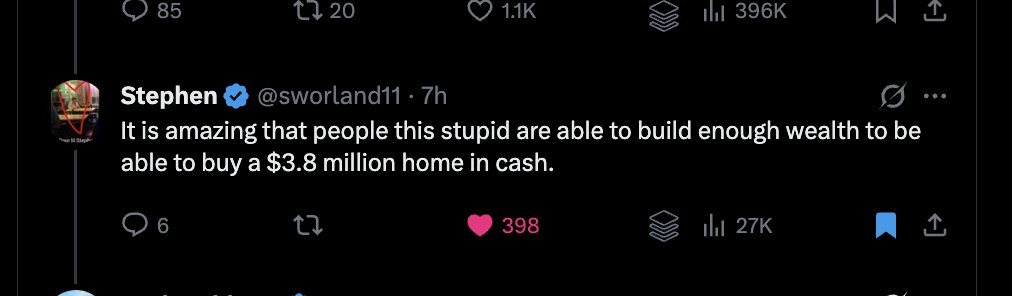
The main determiner of built wealth is finding one thing that makes money and pressing that button over and over again without outsized losses
"smart" people often distract themselves with too many opportunities to do that
The main determiner of built wealth is finding one thing that makes money and pressing that button over and over again without outsized losses
"smart" people often distract themselves with too many opportunities to do that
 Reach Strategic WealthFinancial Planning · Fee-only financial planning for concentrated stock and corporate exits.View profile
Still need SEO? A question I get a lot from business owners is if they should still care about SEO.
100% Yes. But you need to do it completely differently.
SEO isn't dead. Keyword-only SEO is.
The new strategy is called “Social Signals” and I made a full video breaking it down for you.
Here are a few tips:
1. Remember that search isn't just Google now. It's Bing, ChatGPT, Perplexity and more.
2. Find the common questions your ideal customer asks.
3. Create content that answers each one.
4. Make videos like this one, where you answer a real customer question.
5. Be the one with the answer, and you'll show up in Google and AI results.
SEO used to be about a few keywords people typed into Google. Now I build content around answering the questions customers actually ask. That's how you show up everywhere people search today.
Comment "ADS" if you want to see what your ads would look like before you launch.
 Brad SmithFounder of AutomationLinksAbout Brad
It took me 3 minutes to save money on CI/CD by using Claude Code 🤯
I literally asked him: "Analyze all github workflows and actions in this repo. Suggest which ones can be switched from ubuntu-latest to ubuntu-slim and why". When he replies choose the workflows and actions you want switched. Done.
I literally asked him: "Analyze all github workflows and actions in this repo. Suggest which ones can be switched from ubuntu-latest to ubuntu-slim and why". When he replies choose the workflows and actions you want switched. Done.
The Java GuySoftware & Training · Training and software for professional Java developers.View profilePoolReady is crushing it!
Screenshot: mockup from our Customer Success team for a landing page revamp to highlight promotions.
Guess what? This will cost our client $0 extra. It's just a part of what we do at Eversite.
We've helped PoolReady grow in both:
(A) Lots of new leads for their services
(B) Lots of new franchise location leads
They used to pay $5K-$10K to a broker per closed new franchisee.
Now they just pay for ads we run, for a small mgmt fee.
Local service franchises are our top ICP. It's a win-win every single time.
 EversiteWeb Design & Marketing · Website design, ongoing updates, and digital marketing.View profile
Your AI assistant doesn't need the master key because it found the filing cabinet.
Reading an invoice, changing it and paying it are three different jobs.
Give it one job. Set the permissions to match.
Reading an invoice, changing it and paying it are three different jobs.
Give it one job. Set the permissions to match.
 CloudRavelAI Services · Agentic AI setup and ongoing bot care for small businesses.View profile
I acquired a window treatment manufacturing and installation business with an SBA loan in April 2024 doing about $3M in revenue.
We did $3.9M in 2025 and are on pace for around $4.8M this year.
One thing I’ve learned is that growing a business from $3M to $5M is a very different exercise than I expected.
When I bought the company, I figured the biggest opportunities were pretty obvious. Improve marketing, grow the sales team, expand geographically, increase production capacity.
Most of which we have done and have resulted in growth.
However, a surprising amount of our growth has come from fixing really basic stuff.
We manufacture our own shutters, sell several other window treatment products, and handle our own installations. We’re effectively running a manufacturing business, a retail sales business, and a service business under one roof.
This creates some complex workflows with many opportunities for things to go wrong like…
-30% of our leads never get more than 1 touch and never get booked.
-A measurement error turns into a full-job shutter remake.
-Production finishes a job that sits in the warehouse because nobody scheduled the installation.
-An installer takes 5 hours on a job we estimated at 2 and we have to reschedule the day’s remaining jobs.
Individually, none of these things are a huge deal, but multiply them across thousands of jobs and they add up to a 5, probably 6, figures of dollars 💸.
So we’ve been putting a ton of effort into relatively boring things. Better follow-up processes, production scorecards, tracking install hours, reducing remakes, and getting clearer about who owns what.
The other thing I’m realizing is how much of the business still depends on me or a couple of key people knowing what needs to happen.
That’s probably the biggest challenge I’m working through right now.
I want to get to $10M+. I want to make more acquisitions and I want to spend more of my time working on those opportunities instead of day-to-day operations.
But I’m becoming increasingly convinced that buying another business before I’ve figured out how to make this one less dependent on me would be a mistake.
I could probably push this business to $6M or $7M by continuing to do more of what we’re already doing, but if that growth requires me to be even more involved than I am today, I’m just making myself a bigger bottleneck. Eventually, I’ll be the very thing preventing us from growing beyond that point.
That’s the part of scaling a small business that’s been harder than I expected. My original thesis was to use this business as a platform for bolt-on acquisitions, and that hasn’t changed. Before I start adding spokes, though, I need to make sure the hub is strong enough to support them!
It’s taking longer than I’d like (and 60% growth in 30 months ain’t bad!), but I’m confident we’ll get there in the next 6–12 months.
AAA Blind & Shutter FactoryHome Services · Custom shutters, blinds, and shades for the Grand Strand.View profile$80M Series B startup vs. 4-hours Claude Code
"Polish" is this vague mystical quality that designers are obsessed with.
Not because it's cool, but it influence perception way more than we are willing to admit.
We as consumers are constantly "experiencing" things, products, visuals etc.
It's the reason why you wouldn't rush to throw away that box the second you pull your new iMac out.
It's that subliminal memory you had when you use iPhone for the first time, with that inertia scrolling across the magical glass.
There is a place for extreme speed and affordability, but at a certain stage of your startup journey, there will also be a stage where details and perceptions are extremely expensive to get wrong.
 John LamWeb Design & Marketing · Design studio for AI-native service and product companies.View profile
I would love to see more email security filtering services with 365 integration use more AI. Not just for filtering but basic management help too. Too many MSPs spend too much total time whitelisting/blocking and doing small end-user requests that could be better verified and automated.
Blackfin AccountingAccounting & Bookkeeping · Bookkeeping, payroll, and tax for service businesses in Bozeman, MT.View profileYour shop is #1 on Google. But only where you're standing.
Last week I talked with a local HVAC shop owner. He told me his SEO was fine. He has a good person handling it. And when you search "furnace repair" or "AC repair" in his town, his shop shows up first.
He's not wrong. But he's only looking at one spot on the map.
Here's the mistake I see almost every time.
Most shops optimize for the town name. "Furnace repair Cincinnati." "AC repair near me in Cincinnati."
The goal is to show up #1 when someone searches from the middle of town.
But your customers don't all live in the middle of town.
Google Maps results change based on where the person is standing when they search. A homeowner 1 mile north sees a different list than a homeowner 3 miles south. Same search. Same town. Different winners.
So the real question isn't "Am I #1 in my town?"
It's "Am I #1 where my customers actually live?"
Look at the image below. It's a map check for "furnace repair" in one town. Each dot is a spot on the map, about 1 mile apart. The color shows which shop is #1 at that spot. 81 spots total.
The shop that "wins" this town is the orange one. It's #1 at 18 spots. That's more than anyone else.
Now flip that around.
That same shop is NOT #1 at 63 spots. That's nearly 8 out of 10 searches in the area going to someone else.
And look where the orange dots are. They're bunched in the middle, right around the circled dot. Move a mile or two to the edges and other shops take over. The blue shop owns the right side. The teal shop owns the top. A few spots go to private equity shops.
If you only check from the center, orange looks like the clear winner. It is, in that one spot.
Why does this happen?
Google looks at three main things for map results:
How close the shop is to the searcher
How well the shop matches the search
How trusted and known the shop is online
You can't move your shop. So distance works against you the farther a customer is. The only way to reach those outer spots is to get stronger on the other two. That means real pages for the areas you serve, steady reviews, photos and posts from actual jobs, and a Google profile that makes it clear where you work.
Most SEO stops at the town name.
It builds one city page, gets the center dot green, and calls it done.
And here's the bigger problem.
What if your shop isn't in the middle of town at all? Lots of HVAC shops sit on the edge of town or out on a county road. If you only optimize for the town center, you might not even win the spot you're aiming for. You'll win the few blocks around your building and not much else.
Your customers are spread out across your whole service area.
Your map rankings should be too.
So if someone tells you "we're #1 for furnace repair," ask one more question:
"#1 from where?"
Then ask to see the whole map.
Want me to run a map check like this for your shop? I'll show you where you win and where you don't
 ExtPathLocal SEO · Local SEO for one independent HVAC shop per service area.View profile
The secret to success is service. No matter where you are in your business, if you consistently show up and help other people, success is in your future.
Mount Pleasant ScoopLocal Media · A free weekly newsletter on events and things to do in Mount Pleasant, SC.View profile